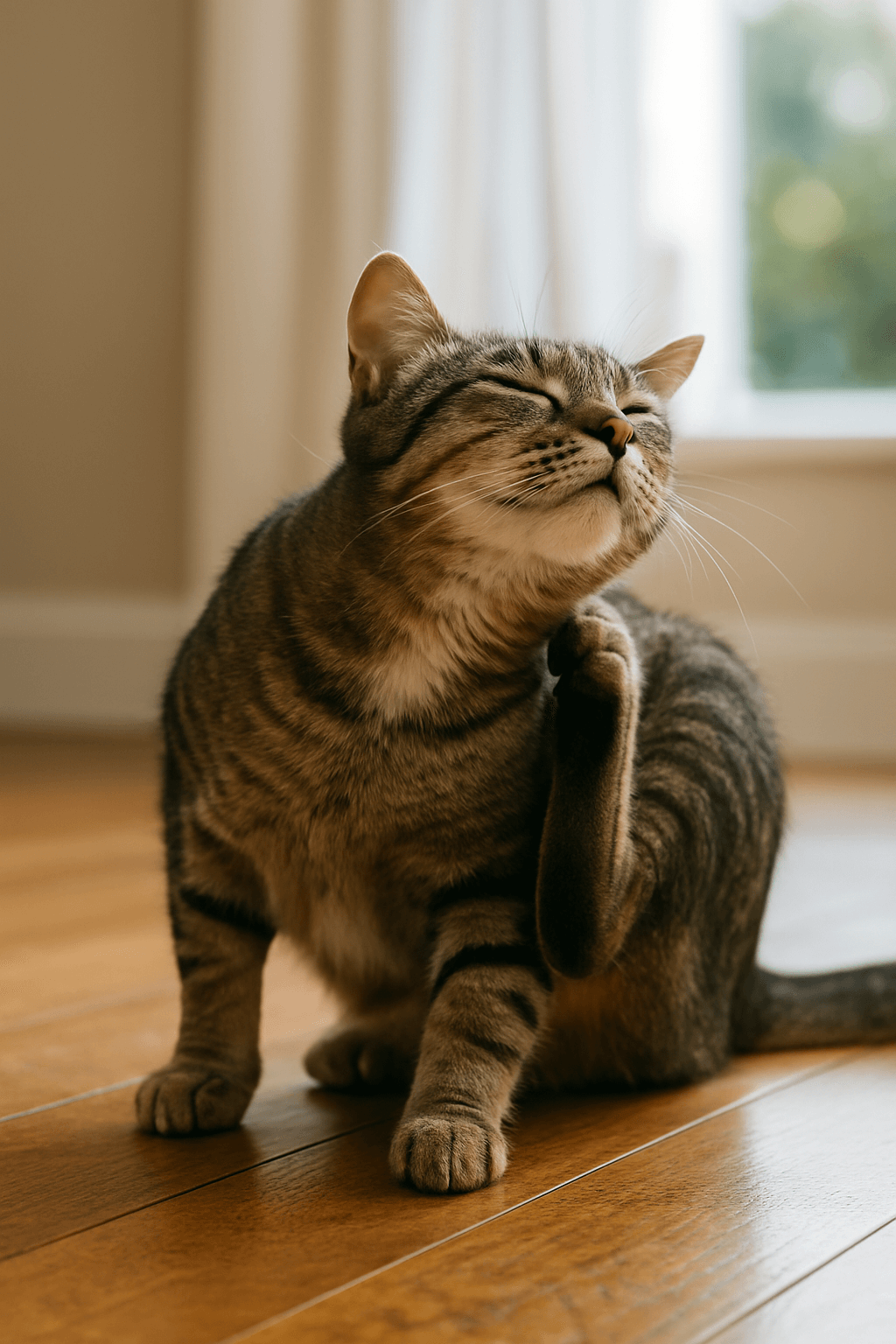
Happy Skin, Happy Cat - Addressing Feline Dermatological Issues
A cat’s skin and coat are vital indicators of their overall health. Skin issues are relatively common in cats and can cause discomfort, itching, and even lead to more serious problems if left untreated. Understanding the potential causes and knowing when to seek veterinary help is essential for keeping your cat’s skin healthy.
Common Feline Skin Problems
You might notice signs like:
- Excessive scratching, licking, or biting at the skin
- Redness, inflammation, or irritation
- Scabs or crusty areas
- Hair loss or thinning coat
- Dandruff or flaky skin
- Rashes or bumps
- Oily or greasy coat
- Unpleasant odour from the skin
Uncovering the Causes
Feline skin issues can stem from a variety of sources, often requiring veterinary investigation to pinpoint the exact cause:
- Allergies: This is a very common culprit. Cats can be allergic to flea bites (the most common), food ingredients, or environmental factors like pollen, dust mites, or mold.
- Parasites: Fleas, mites (like ear mites or walking dandruff mites), and ticks can all cause skin irritation and itching.
- Infections: Bacterial or fungal infections (like ringworm) can affect the skin.
- Stress or Psychological Factors: Cats can overgroom to the point of causing skin lesions or hair loss when stressed.
- Underlying Health Conditions: Hormonal imbalances or other systemic diseases can sometimes manifest as skin problems.
Caring for Your Cat’s Skin
If you notice any persistent or severe skin issues, a trip to the veterinarian is crucial for proper diagnosis and a tailored treatment plan. Depending on the cause, treatment might involve:
- Parasite Control: Effective flea and tick prevention is essential.
- Medication: For allergies, infections, or underlying conditions, your vet might prescribe oral medications or injections.
- Dietary Changes: If a food allergy is suspected, a prescription elimination diet might be recommended.
- Topical Treatments: Medicated shampoos, mousses, wipes, or ointments might be prescribed to soothe the skin, treat infections, or control itching. Use these only as directed by your vet.
- Environmental Management: Reducing exposure to known allergens (like dust) can help for environmental allergies.
Regular grooming is also an important part of skin health, helping to distribute natural oils and allowing you to spot potential problems early.
Feline dermatological issues can be complex, but with veterinary guidance and consistent care, you can help your cat find relief from discomfort and maintain healthy skin and a beautiful coat.